From BIM Models to Accountable Action
Edition: 24 October 2026 · BIM News · English
Three developments connect project information with real-world decisions: construction robots practising inside models, insurance-document review that stops short of approval, and machine data entering mixed-fleet workflows. The common question is not merely what a system can detect, but who checks the evidence before anyone acts.
This is an archived recent-developments digest, not three same-day launches. The announcements below were published earlier in October. Sources were checked retrospectively on 25 October 2026 against the 24 October edition cutoff. Vendor capability statements are not independent BIMETI product tests. The original clay illustrations explain concepts; they are not product screenshots or test footage.
1. Construction robots: simulation is not site approval

On 16 October, Shimizu announced an investment in Noble Machines and a development collaboration for construction humanoids. It plans virtual simulations using BIM/CIM data by the end of 2026, followed by physical construction-site tests from spring 2027. Proposed tasks include material transport, site navigation and patrols. This is a development programme, not evidence that autonomous robots are ready for unrestricted deployment. The release establishes neither a purchase price nor a proven production productivity rate. Source: Shimizu announcement, 16 October 2026.
For a BIM team, the practical preparation is to separate permanent design geometry from temporary site conditions. A model may show a clear corridor while missing today's stacked materials or a newly restricted work area. Identify who updates access routes, how changes are dated and how uncertainty reaches the person responsible for safety. Attach each simulation result to its model revision and assumptions. Passing a virtual route does not establish that the physical route is safe.
2. Insurance review: AI flags, people decide

Lumber's 21 October announcement, on a press-release page dated 22 October, introduces its Certificate of Insurance Agent on the Procore Agent Marketplace. A certificate of insurance, or COI, forms part of the documentation reviewed when checking a subcontractor's coverage. Source: Lumber-issued release.
Lumber says the agent compares certificates with subcontract requirements, highlights potential gaps and tracks renewals. Its official product page explicitly says the agent does not independently approve or reject subcontractors: people retain the decision. These are vendor descriptions, not independently verified accuracy or time-saving results. Source: Lumber COI Agent.
A useful proposed test is deliberately small: synthetic documents containing one expired date and one missing requirement. Ask for the relevant evidence, then have a qualified reviewer check both the flagged issues and missed issues. This test has not been run for this edition. Keep payment approval and site-access decisions outside it. Before using real documents, confirm contractual data permissions and applicable commercial terms. A confident summary is not insurance advice or confirmation of coverage.
3. Fleet data: location is not a completed milestone
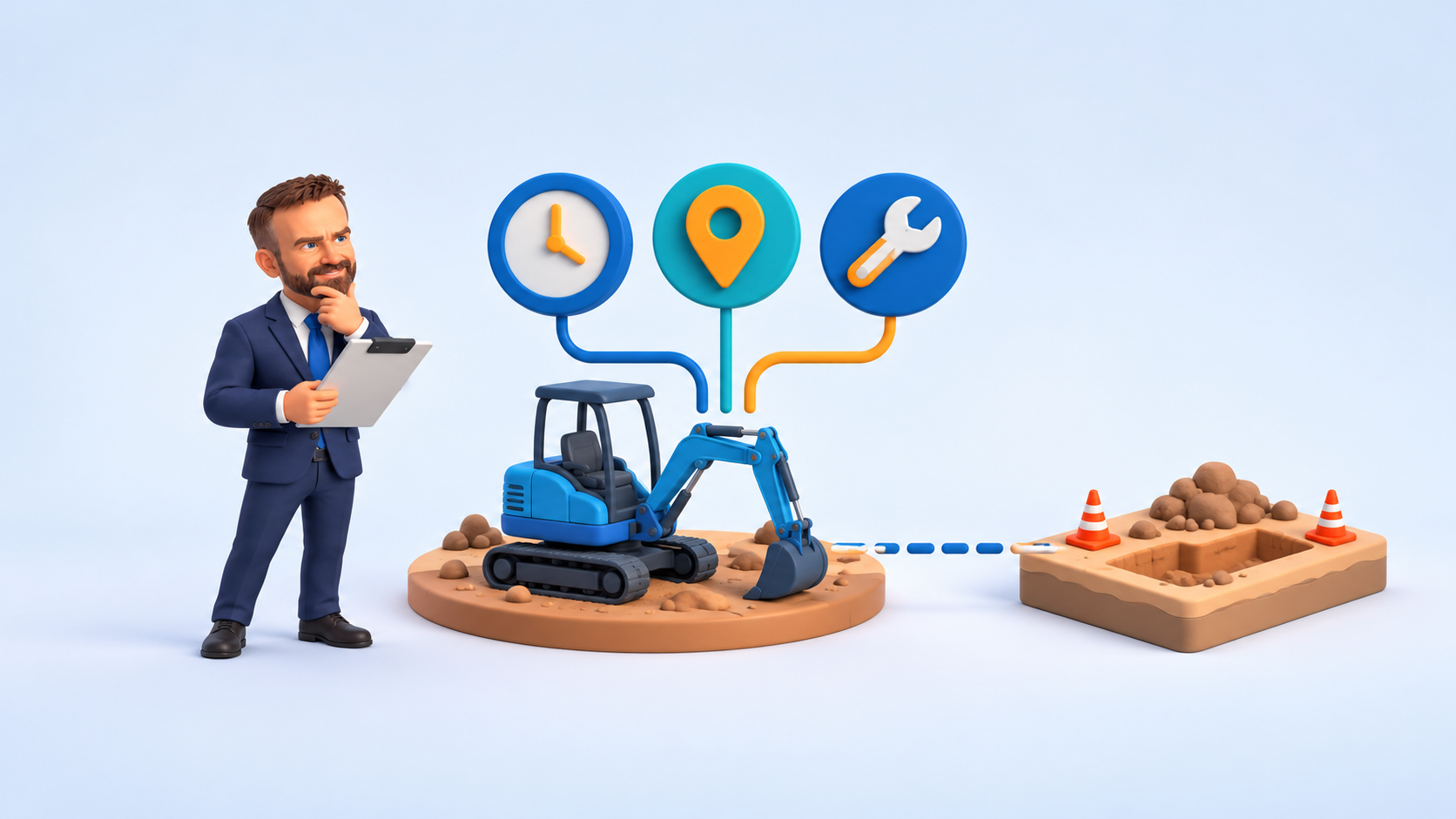
On 22 October, Yanmar announced an enhanced SmartAssist Remote platform for North America. Its release describes location, utilisation and maintenance information, plus AEMP 2.0 API integration with compatible fleet and business systems. Backward compatibility applies to eligible connected machines; five years of included service applies to eligible new equipment. Neither every machine nor every region is included. Source: Yanmar America announcement, 22 October 2026.
The BIM connection is an editorial opportunity, not an announced automatic BIM integration. Before relating an equipment record to a planned work zone, verify the identifier, timestamp, access rights and meaning of a missing update. Machine location does not prove that the planned task is complete. Test the handoff with a small, non-confidential dataset before using it to change a programme or maintenance decision.
The practical takeaway
Keep information, interpretation and authority distinct. A simulated route is not safety approval; an insurance exception is not a commercial decision; a machine record is not a verified construction milestone. Choose one handoff in your workflow and name the person who checks it before anyone acts. No software or equipment was tested for this edition, and no insurer or safety conclusion was established.