A BIM Parameter Is Not Automatically Verified Evidence

Edition: 20 October 2026 · Category: BIM News
This archived edition adapts the dated Daily BIM Tech Brief and its six-story English video script. It covers announcements from 9–19 October, not six same-day launches. Supplier and investor claims remain attributed; the proposed checks are editorial recommendations, not product-test results.
1. Real products test the reliability of model parameters

On 19 October the European Commission published findings from a coordinated market-surveillance campaign involving 14 countries and 106 insulation samples. Of 97 thermal-resistance tests, 31—32%—failed requirements. Eleven of 81 reaction-to-fire tests—14%—did not match the declared class. Marking or documentation requirements failed for 68 samples, or 64%. One product was banned from sale and seven were withdrawn.
These are results for the tested samples, not a failure rate for every insulation product on the market. For BIM teams, they show why an accurately entered number is not necessarily reliable evidence. Retain product codes, declarations, versions, markets and approval status alongside critical values. A material substitution should trigger a new review.
2. RIB Unify expands into Australia

RIB's 19 October announcement describes Australian availability of Unify, rather than its first global release. The platform combines document and process management, field operations, takeoff, estimating and analytics. RIB describes natural-language retrieval through Omni and AI-assisted quantity extraction linked with estimating.
Evaluate a complete chain from a model revision to a quantity, cost and approval. Can a reviewer recover the exact model state behind a number? Check permissions, exports, APIs, audit trails and data-residency terms rather than treating a conversational answer as an approved document.
Source: RIB-authored announcement — https://www.globenewswire.com/news-release/2026/10/19/3383897/0/en/rib-software-launches-unify-an-ai-native-platform-for-australian-construction-projects.html
3. Solvera embeds AI inside an engineering service

Seedcamp announced Solvera's $6.3 million pre-seed round on 15 October. The company starts with building MEP engineering: its stated model uses AI agents while experienced engineers make judgement calls and remain responsible for deliverables. Clients buy a coordinated design, not a software licence. The investor's report of $1 million in contracted revenue within three months is not independently audited.
The important question is accountability. Which agent actions are logged, which changes need approval, and how is the responsible engineer's decision preserved? Measure approved outcomes, corrections and risk—not only hours or generated content.
Source: investor announcement — https://seedcamp.com/views/solvera-raises-6-3m-to-build-the-engineering-firm-of-the-future/
4. RogueX3 remains a concept, not a procurement option

Bobcat's announcement highlights its electric, autonomous, modular RogueX3 loader concept and a 2026 Red Dot design-concept award. It describes positioning technology, sensors and cameras, but does not establish serial production, a price or a delivery date. No BIM interface was announced.
The concept signals how equipment may rely on trustworthy geometry and work-zone data. Any future deployment would still need verified coordinates, safety boundaries, emergency procedures and clear responsibility. Do not write an unconfirmed machine capability into a delivery plan.
Source: Bobcat press-release register, announcement recorded 19 October — https://www.bobcat.com/na/en/company/news-media/press-releases
5. Wireless metrology is not automatic Scan-to-BIM
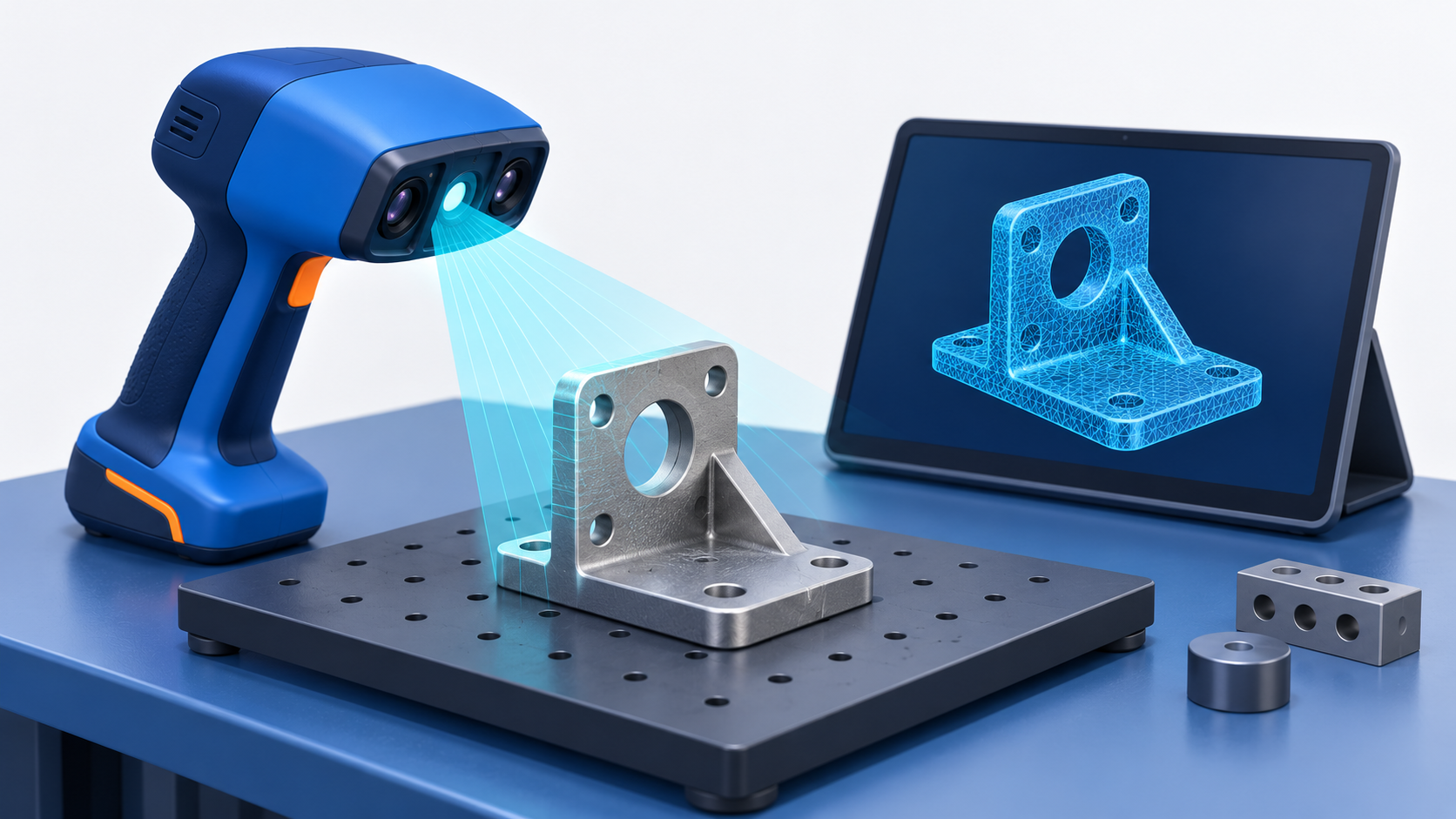
Hexagon introduced HYPERSCAN SR on 12 October and described global availability. The optical-tracking scanner uses Wi-Fi 6, interchangeable batteries and dynamic tracking. Vendor specifications include up to four million points per second and volumetric accuracy starting at 0.06 mm at 3.2 metres; these are not BIMETI measurements.
Its relevance is component inspection and prefabrication rather than an assumption of whole-building scanning. Test measurement conditions, registration, tolerances, file size and the handoff into a fabrication or IFC workflow separately. A precise point cloud does not automatically become a reliable BIM object.
6. Sensor-to-geotechnical-model integration is a stated goal
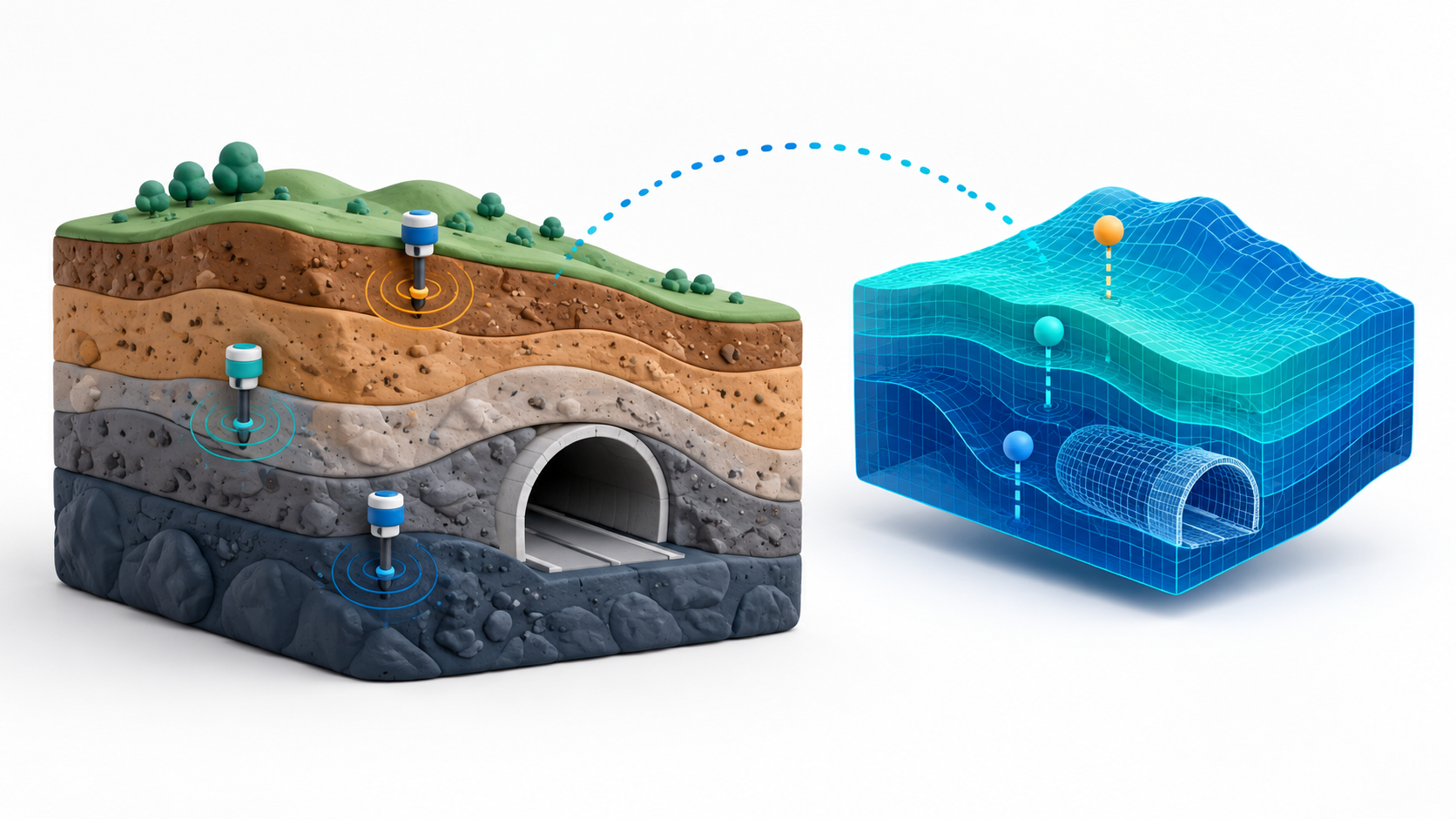
Hexagon announced a $535 million agreement to acquire Rocscience on 9 October, with closing expected in Q4 subject to customary conditions. The companies describe the ambition to connect monitoring sensors with geotechnical analysis and use live data to update models. This is an announced transaction and integration direction, not proof of completed production integration.
Infrastructure teams can prepare by aligning sensor identifiers, timestamps, coordinates, model links and quality states. Preserve export options and distinguish measured observations from inferred model behaviour.
Practical takeaway
Distinguish submitted, verified and measured information. Link critical parameters to evidence, name the reviewer and recheck changes before they affect energy, cost, fire or machine-use decisions. The original AI-generated topic illustrations are editorial concepts, not product screenshots or certified project models.
Watch the edition: https://www.youtube.com/watch?v=pT9qaBqwVGU
Watch the original BIMETI Daily BIM Tech Brief — 20 October 2026. Archived edition; review the cited sources for details and later updates.