Archicad 30: Who Controls Project Data?
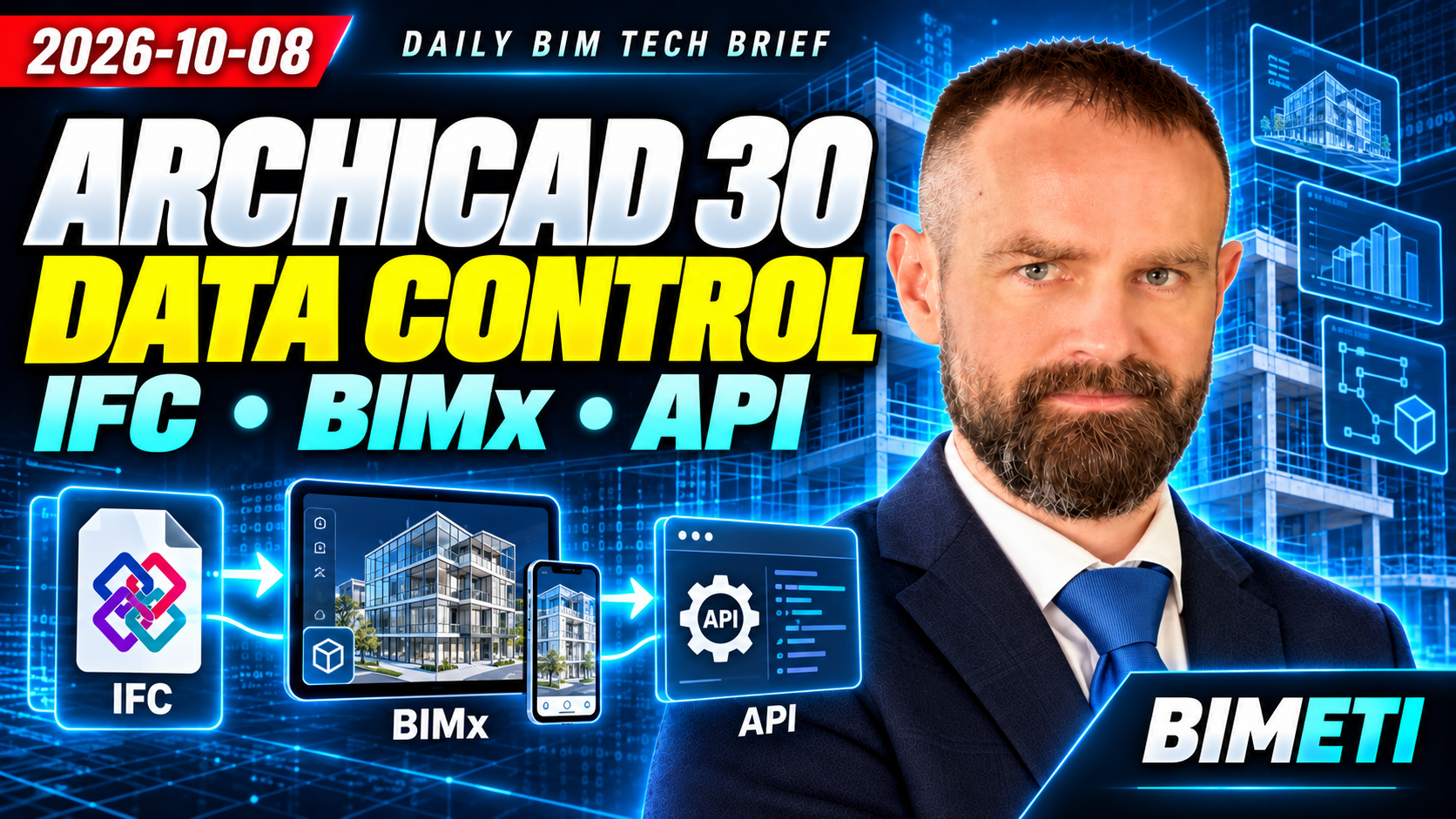
Edition: 8 October 2026 · Category: BIM News
This archived edition preserves the original briefing and its practical analysis. Edition date and underlying announcement dates are different. Product status and reported figures reflect that dated source material, not fresh testing. Conceptual illustrations are original video artwork, not product screenshots.
Visual archive note: the original video reused four conceptual artworks across six topics. The ISO 19650 section has no recovered original topic artwork, so no replacement image has been invented.
Graphisoft portfolio: separate capability and availability
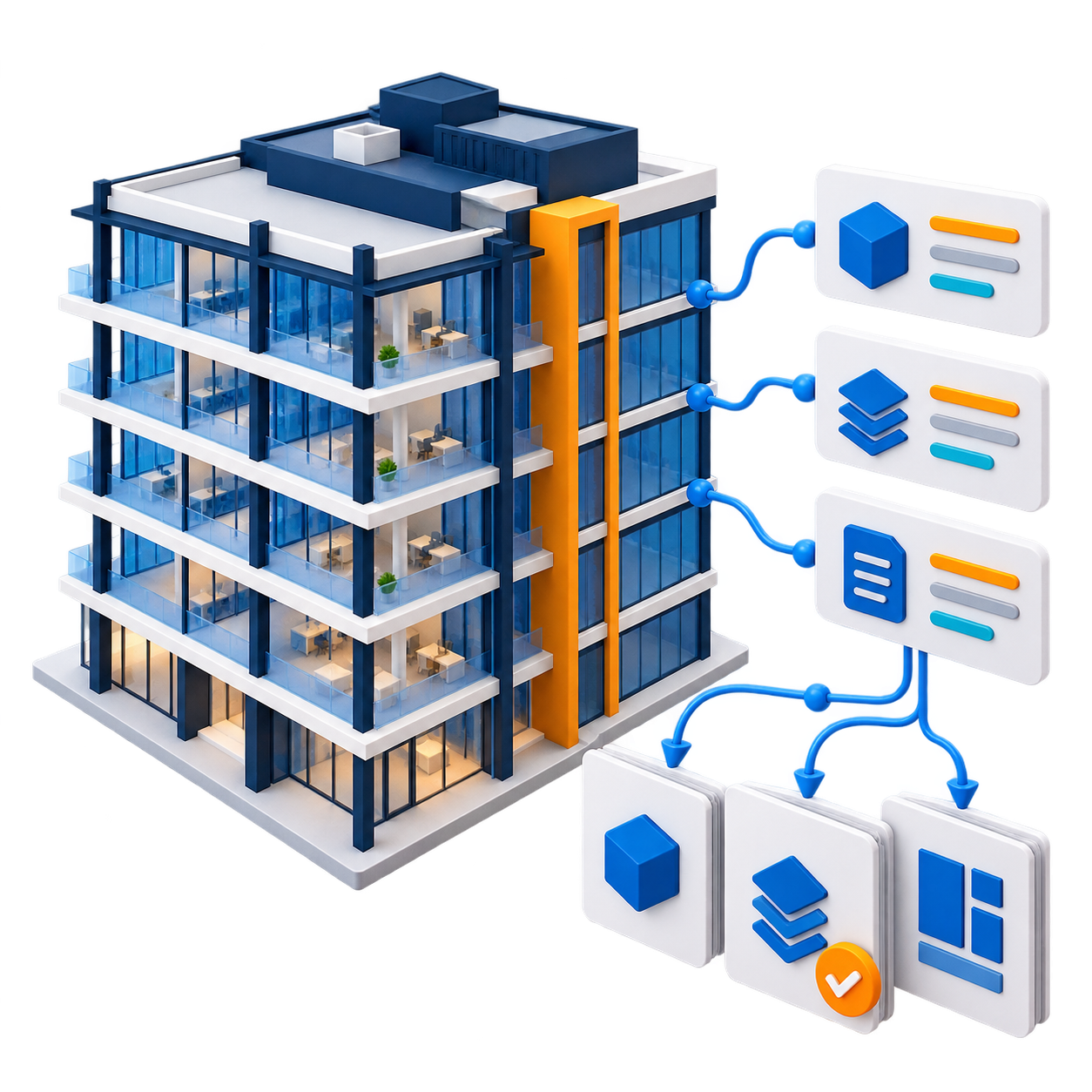
The first story is Graphisoft’s 2026 product portfolio, announced on October seventh. Archicad 30 highlights Dark Mode on Windows, improved visibility for multi-story walls, more flexible documentation, redesigned Project Info, configurable Navigator organization, and expanded labeling. MEP Designer is being rolled out to more than forty additional markets. Graphisoft also introduced three subscription plans: Studio, Collaborate, and Max.
The status of each capability matters. Planned Model Context Protocol support, October early-access opportunities for Nemetschek Creator and the Open Collaboration Platform, an updated AI Visualizer, and AI Assistant Spaces are not the same as generally available production features. Graphisoft explicitly says that dates, scope, subscription packaging, and regional availability can vary. A BIM manager should therefore track available, early access, preview, planned, and roadmap as separate states. Before migration, verify the exact regional installer, entitlement, add-on compatibility, and IFC regression results.
Sources retained in the original edition: https://www.graphisoft.com/de-de/newsroom/graphisoft-unveils-2026-product-portfolio-led-by-archicad-and-ai-enabled-design-intelligence/?id=f8c09677-cef5-425f-b0c5-e212739aa70e
Project Info becomes a programmable publication boundary
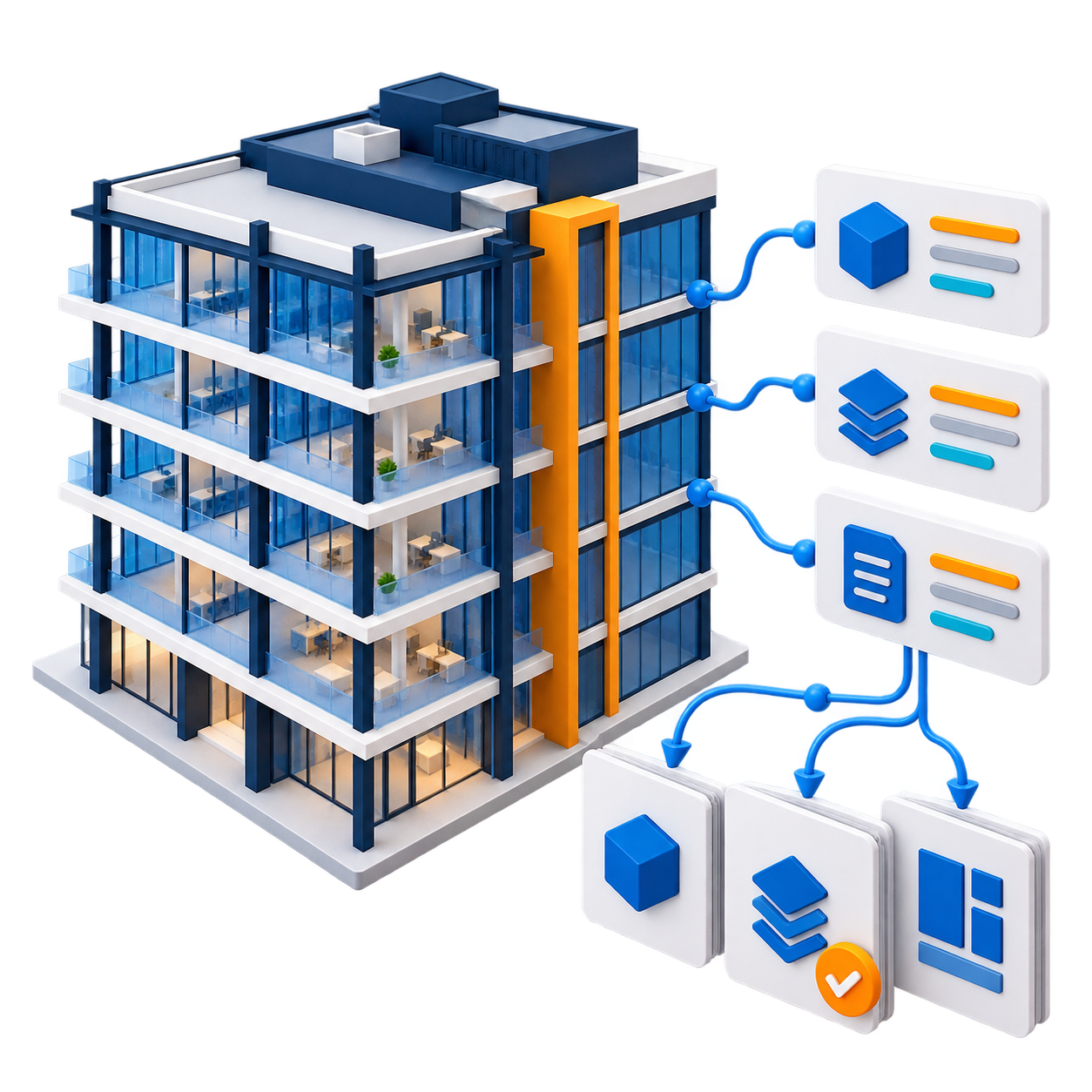
The second story is a technical Archicad 30 change with wider information-management consequences. Project Info can now contain custom groups and fields, move its structure and values between projects through XML, and act as a source for IFC Property Mapping. Values can be mapped to IfcProject, IfcSite, IfcBuilding, and other eligible IFC entities. When publishing BIMx, users can select none, publish all, or define a custom set. Through Archicad 29, all Project Info was always transferred to BIMx. Archicad 30 can restrict the package.
The new C plus plus API lets add-ons create, rename, move, read, and write Project Info groups and fields while respecting Teamwork permissions. It also exposes attribute-creation metadata such as method, source, creator, and timestamp. Project metadata is therefore no longer just title-block text. One field can participate in a template, IFC exchange, BIMx publication, automation, and CDE handover. The practical response is a versioned Project Info dictionary that records the owner, purpose, permitted recipients, and IFC mapping of every field. IFC output, external BIMx sets, XML migration, and API change logs should each be tested separately.
Sources retained in the original edition: https://support.graphisoft.com/hc/en-us/articles/50848272684817-Flexible-Project-info ; https://graphisoft.github.io/archicad-api-devkit/newfeatures.html
Pirros: findings still need human review
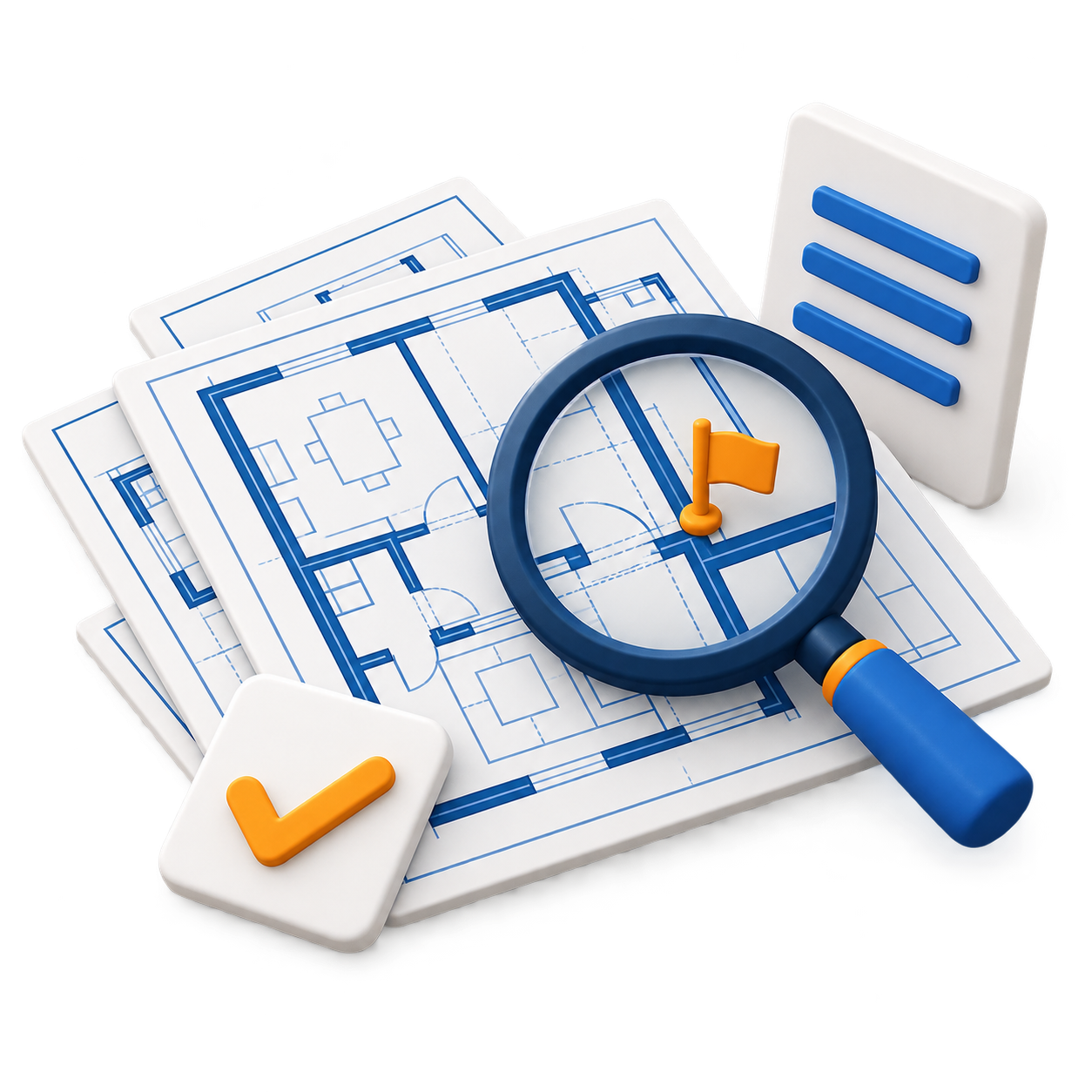
The third story is Pirros Quality Management System for Revit projects. The new system reviews project sheets against firm standards, codes, specifications, and model-health conditions. Findings include a sheet, location, and severity. They can be confirmed, dismissed, escalated, or assigned to a person. Pirros says findings are never applied automatically and that decisions and resolutions leave an audit trail. The system can also read PDF sets, while active-project review is an add-on metered by the number of sheets reviewed.
The Mira agent can propose and, after approval, execute changes in Revit, but availability is limited. It currently supports Revit 2025, 2026, and 2027 on Windows, and only a defined list of countries. Lithuania is not on that list. A launch announcement and vendor claims do not prove accuracy on a specific project. A pilot needs a controlled set of known correct and incorrect cases. Teams should measure precision, false findings, missed issues, human corrections, and review time, while also checking regional availability, data flows, consent, Undo behavior, and audit export.
Sources retained in the original edition: https://aecmag.com/bim/pirros-adds-ai-powered-qa-qc-to-its-revit-centric-platform/ ; https://www.pirros.com/quality-management-system ; https://help.pirros.com/en/articles/15001022-meet-mira-the-ai-agent-for-revit
Buildcheck: evaluate the evidence behind automated checks
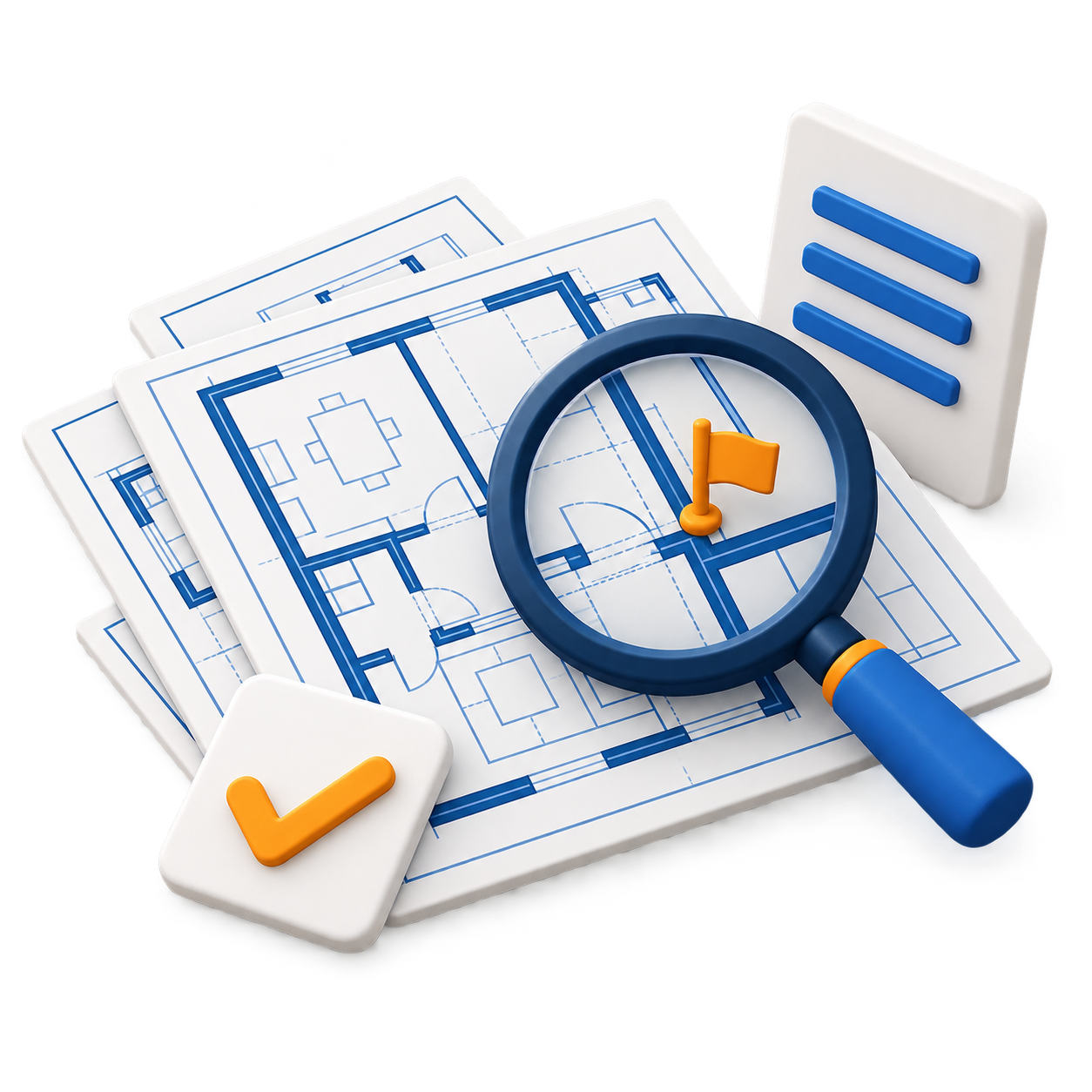
The fourth story is Buildcheck. On October sixth, the company said WND Ventures, the corporate venture arm of DPR Construction, joined a twelve-million-dollar Series A led by Telescope Partners. Buildcheck reports eighteen million dollars raised across nine months. The most useful new detail is not the amount. The investment followed a limited proof of concept and several pilot deployments inside DPR.
Buildcheck says its platform performs more than four hundred automated drawing checks. The funding is intended to expand code compliance, value engineering, specification-to-drawing comparison, custom checks, and computer vision. Those are vendor figures, not an independent accuracy audit. The transferable lesson for BIM procurement is to request an evidence matrix rather than a demonstration: drawing types, a known error set, precision and recall, false positives, missed issues, exact source locations, and the human approval path.
Sources retained in the original edition: https://buildcheck.ai/insights-case-studies/dpr-constructions-venture-arm-backs-buildcheck-in-12m-series-a
Bentley awards: case studies, not an independent ROI audit
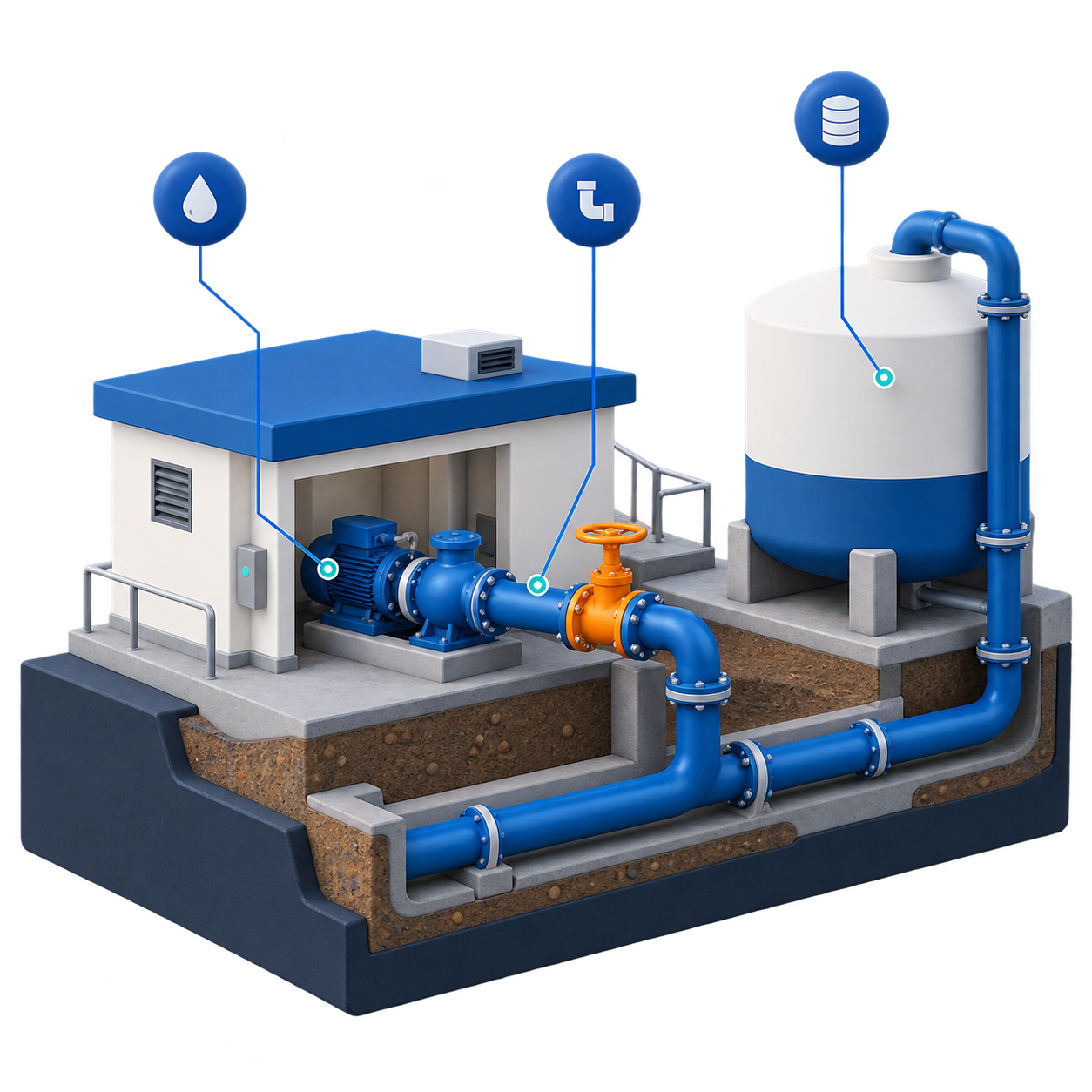
The fifth story is Bentley Systems’ 2026 Year in Infrastructure Awards. More than three hundred projects from fifty-three countries were considered across twelve categories. Winners include Wills Bros for the Dublin Port construction project, Port Polska in project delivery, Evides for operational water-distribution digital twins at scale, and Australia’s APD Global for AI-driven digital delivery in renewable-energy transmission. Founders’ Honors also recognize a CDE for climate-resilient infrastructure, an iTwin AI lifecycle-intelligence platform, and a university project applying autoencoders to leak management.
Awards are not an independent audit of return on investment. They are still a useful case-study shortlist. Digital-twin value is increasingly being linked to operations, resilience, and lifecycle data rather than a three-dimensional view alone. Select the two most relevant cases and look for full technical presentations covering data sources, update frequency, object identifiers, CDE boundaries, decisions that changed, and measured outcomes.
Sources retained in the original edition: https://www.bentley.com/en/news/bentley-systems-announces-winners-of-the-2026-year-in-infrastructure-awards/
Reality capture: compare measurement conditions

The sixth story is a status review of reality-capture products announced on September fifteenth and not covered in earlier editions of this briefing. FARO introduced the Focus i.1 and Focus i.1 X terrestrial scanners and the mobile Rovi i.1 package. The vendor states object accuracy of up to zero point nine millimeters. The Focus i.1 X adds GNSS and RTK support and a scanning range of up to four hundred meters. XGRIDS introduced the handheld Lixel L3, claiming validated five-millimeter relative accuracy and approximately two point five centimeters of real-time absolute accuracy. A single capture can produce colorized point clouds, meshes, and three-dimensional Gaussian Splatting scenes.
Those numbers are not directly comparable. Terrestrial-scanner object accuracy, handheld SLAM relative accuracy, and RTK absolute position describe different conditions. A purchase or pilot specification should define the control network, coordinate reference system, ranges, surface types, registration method, allowable drift, and tolerances for the final IFC or CAD result. Vendor tests should be repeated on a representative site.
Sources retained in the original edition: https://www.faro.com/en/News-Library/2026/FARO-INSIGHT-Introduces-New-Reality-Capture-Solutions ; https://www.prnewswire.co.uk/news-releases/xgrids-unveils-lixel-l3-at-intergeo-2026-setting-a-new-benchmark-for-spatial-capture-with-validated-5-mm-accuracy-302878820.html
ISO 19650: drafts remain drafts
The seventh story is a status check on ISO 19650. The second editions of the first three documents in the series remain drafts. The ISO project pages show stage forty point ninety-three: after the first Draft International Standard ballot, the decision was to prepare a new DIS ballot. These are not published International Standards. ISO states that the new document defining the information-management process will replace the current delivery and operational-information editions. A separate new document will provide implementation guidance for that process.
Until the new editions are published, project teams should not rewrite their BIM execution plans or CDE processes around draft text. Instead, maintain an impact log covering terminology, roles, information-delivery stages, operational information, and references that may need updating later.
Sources retained in the original edition: https://www.iso.org/standard/89703.html ; https://www.iso.org/standard/89704.html ; https://www.iso.org/standard/90358.html
Analysis: define each metadata exit point
Today’s deeper analysis focuses on Project Info as a publishing boundary. Project number, address, site, client, and permit details are often treated as administrative text. Archicad 30 reveals a different architecture. One field can feed AutoText, travel through XML, map into IFC, publish to BIMx, and be changed through an API. It is part of a small data supply chain.
The opportunity is clear. One versioned information dictionary can support several partial models, reduce copying between title blocks, IFC, and BIMx, and enable automated checks for required fields before issue. The risks grow with reuse. An old XML file can overwrite a newer value. A field can map to the wrong IFC entity or property. An internal project code or contact detail can leak into BIMx. API permission to change a value does not prove that the value is correct. Clean Project Info also does not replace CDE status, review, and approval workflows.
Five practical steps follow. First, define the owner, purpose, data type, requirement level, and permitted recipients of every field. Second, classify fields as internal, project-wide, or suitable for external publication. Third, build a small reference project and test XML import, IFC mapping, and the BIMx custom set. Fourth, verify not only the IFC value but also its entity, property set, unit, and model revision. Fifth, log the user, time, add-on version, previous value, new value, and human approval for API changes.
For education, a useful laboratory exercise asks students to create the same project datum in the authoring tool, exchange it through IFC and BIMx, and explain the source, transformation, publication filter, and recipient-visible result.
Today’s conclusion is simple. Project metadata becomes more valuable when the same approved datum can be reused. Risk rises at the same time. Every exit point, whether IFC, BIMx, a CDE, or an AI agent, needs an explicit permitted set, a version, and a verification step.
Watch the edition: https://www.youtube.com/watch?v=IaduIuQqEJM
Watch the original BIMETI Daily BIM Tech Brief — 8 October 2026. Archived edition; review the cited sources for details and later updates.