Archicad 30: Test Before Rollout
Edition: 12 October 2026 · Category: BIM News
This archived edition preserves the original briefing and its practical analysis. Edition date and underlying announcement dates are different. Product status and reported figures reflect that dated source material, not fresh testing. Conceptual illustrations are original video artwork, not product screenshots.
Archicad 30: distinguish production from roadmap

The first and most important story is Graphisoft’s 2026 product portfolio and Archicad 30, announced on October seventh. Production capabilities include a direct Autodesk Forma connection, improved IFC four point three import, more flexible mapping of zones and other classified elements to IFC Spatial Zone during export, and more precise import of Revit 2026 RFA family types. MEP Designer is included in Archicad Collaborate and Archicad Max plans, while standalone availability depends on the local partner. BIMcloud adds a multi-project Teamwork migration utility, an emergency grace period and public links that do not require a recipient licence.
The crucial detail is that the whole announcement is not at one maturity level. Archicad MCP is explicitly labelled beta. The Open Collaboration Platform is early access. Nemetschek Creator is described as coming soon. Production IFC, RFA, Forma and BIMcloud capabilities can therefore move into controlled pilots, but experimental services should not yet be written into contractual delivery processes as guaranteed functions.
Sources retained in the original edition: https://www.nemetschek.com/en/news-media/graphisoft-unveils-2026-product-portfolio-led-archicad-and-ai-enabled-design ; https://www.graphisoft.com/en-us/plans-and-products/whats-new/
Workstation compatibility is a deployment gate

The second story is directly about deployment. Graphisoft’s system requirements state that Archicad 30 supports Windows 11, while Windows 10 is installable but not officially supported. The company also advises against upgrading a primary Mac to macOS 27 until an operating-system issue is resolved. The integrated Redshift renderer currently does not support NVIDIA GeForce RTX forty-series or fifty-series cards; CineRender is recommended on those workstations. For mid-sized projects, Graphisoft recommends thirty-two gigabytes of memory and six gigabytes of video memory. Large projects call for sixty-four gigabytes or more and at least eight gigabytes of video memory.
The practical conclusion is simple: a newer computer is not necessarily a compatible workstation. Before upgrading, inventory the operating system, GPU, RAM, add-ons and licensing method, then test modelling, publishing, Teamwork, rendering and recovery as separate workflows.
Sources retained in the original edition: https://www.graphisoft.com/en-us/plans-and-products/system-requirements/
Mira: six documentation skills with transaction controls
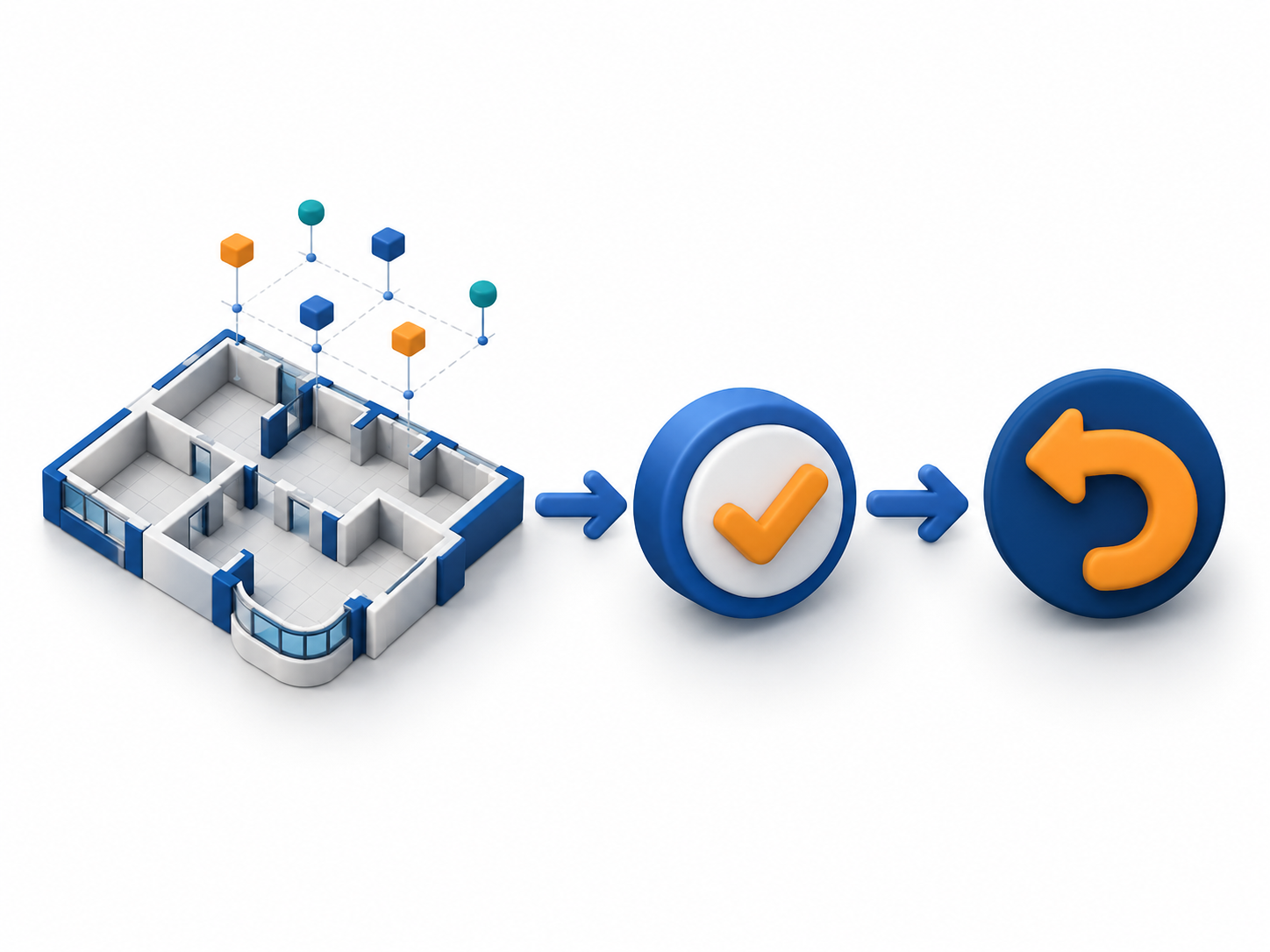
The third development is Mira, the Pirros agent that runs inside Revit. On October eighth it gained six documentation skills: renumbering details on a sheet, auditing annotation standards, editing text notes in bulk, setting parameters, centring room tags and flipping grid heads across views. The system shows a plan before making changes, asks for confirmation and can reverse the whole batch with a single undo. It also reads PDFs, plans multi-step tasks and supports Revit 2025, 2026 and 2027 on Windows.
The most valuable part is not the chat interface. It is transaction control: a plan before execution, human approval and a rollback path. However, this is a vendor description, not an independent accuracy or security audit. A sensible pilot starts with a low-risk task that is easy to verify and records before-and-after states, the number of affected elements and the exception list.
Sources retained in the original edition: https://www.pirros.com/blog/new-in-mira-six-skills
Qonic: components should not update silently
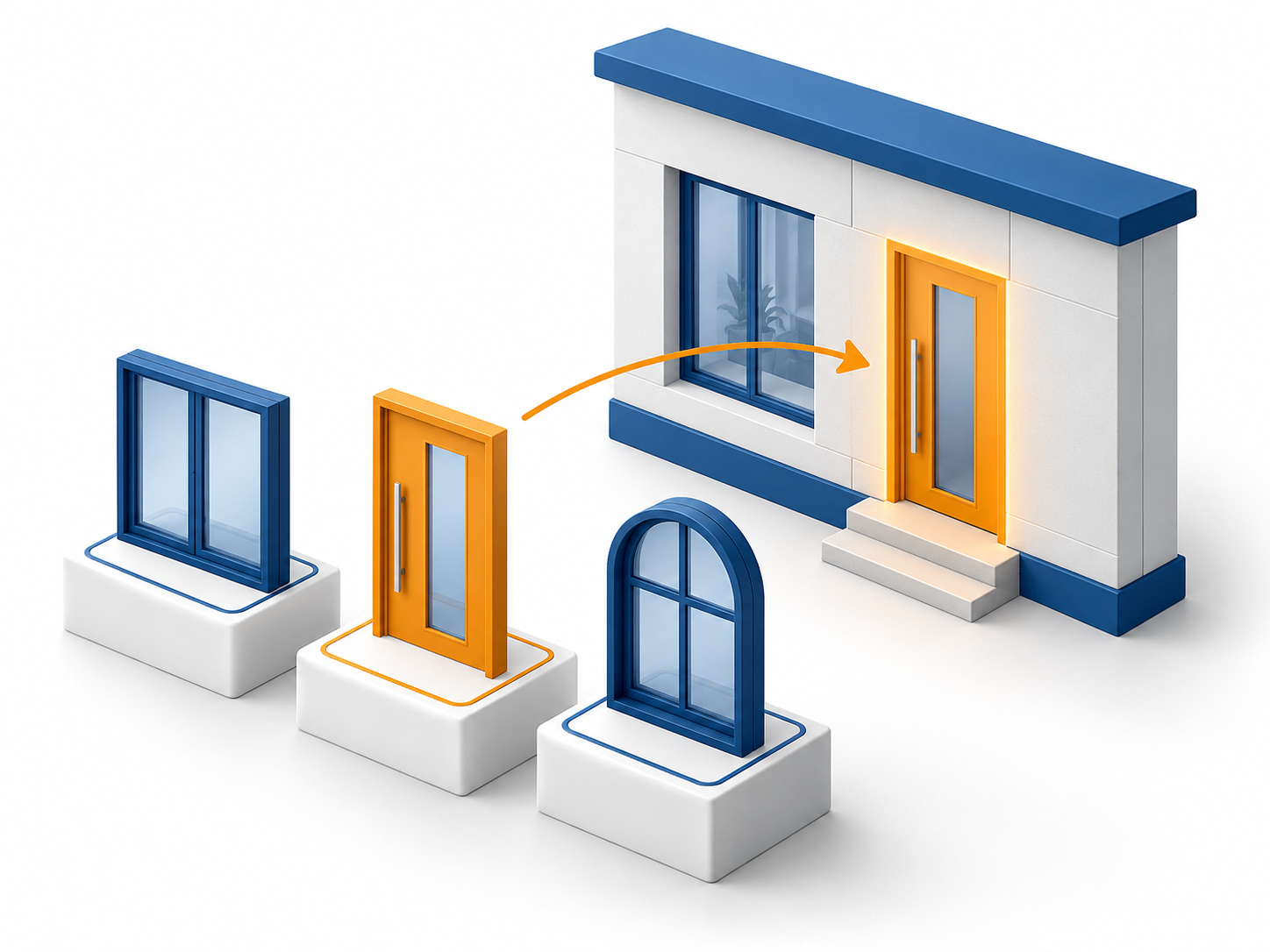
The fourth story is Qonic’s October release. The IFC-native platform now has an integrated project dashboard in its Windows and macOS app, dynamic model loading, a unified clipboard across projects and sessions, contextual Smart Snapping, Paste and Replace for doors and windows, a versioned component editor, grid creation, height measurement, project units and reusable drawing-generation presets.
One governance principle stands out. Publishing a new component version does not silently overwrite existing instances. They are marked as out of date, and the user decides which ones to update, which to keep and when to create a variant. Drawing appearance rules can use IFC class or material. This shows an IFC-native environment moving from viewing and checking towards authoring and documentation. A pilot should verify GUID and classification retention, copy semantics, component-version control and repeatability of drawing presets.
Sources retained in the original edition: https://community.qonic.com/t/qonic-october-release-notes-2026/359
Automation: isolate the new Python environment

The fifth theme connects automation and robotics. Python three point fifteen reached stable release on October ninth. Changes include UTF eight as the default encoding, explicit lazy imports, an immutable dictionary type, an upgraded experimental JIT and progress on the stable ABI for free-threaded builds. The official release page warns that tkinter and IDLE can hang on macOS 27.
For BIM teams, the key point is that a stable Python release does not mean the Revit, Dynamo, pyRevit or C-extension ecosystem is already compatible. The new interpreter should be tested in isolation, package versions should be locked, and production automation environments should remain unchanged until critical scenarios pass.
Sources retained in the original edition: https://www.python.org/downloads/release/python-3150/
Construction robotics: research is not site-safety approval
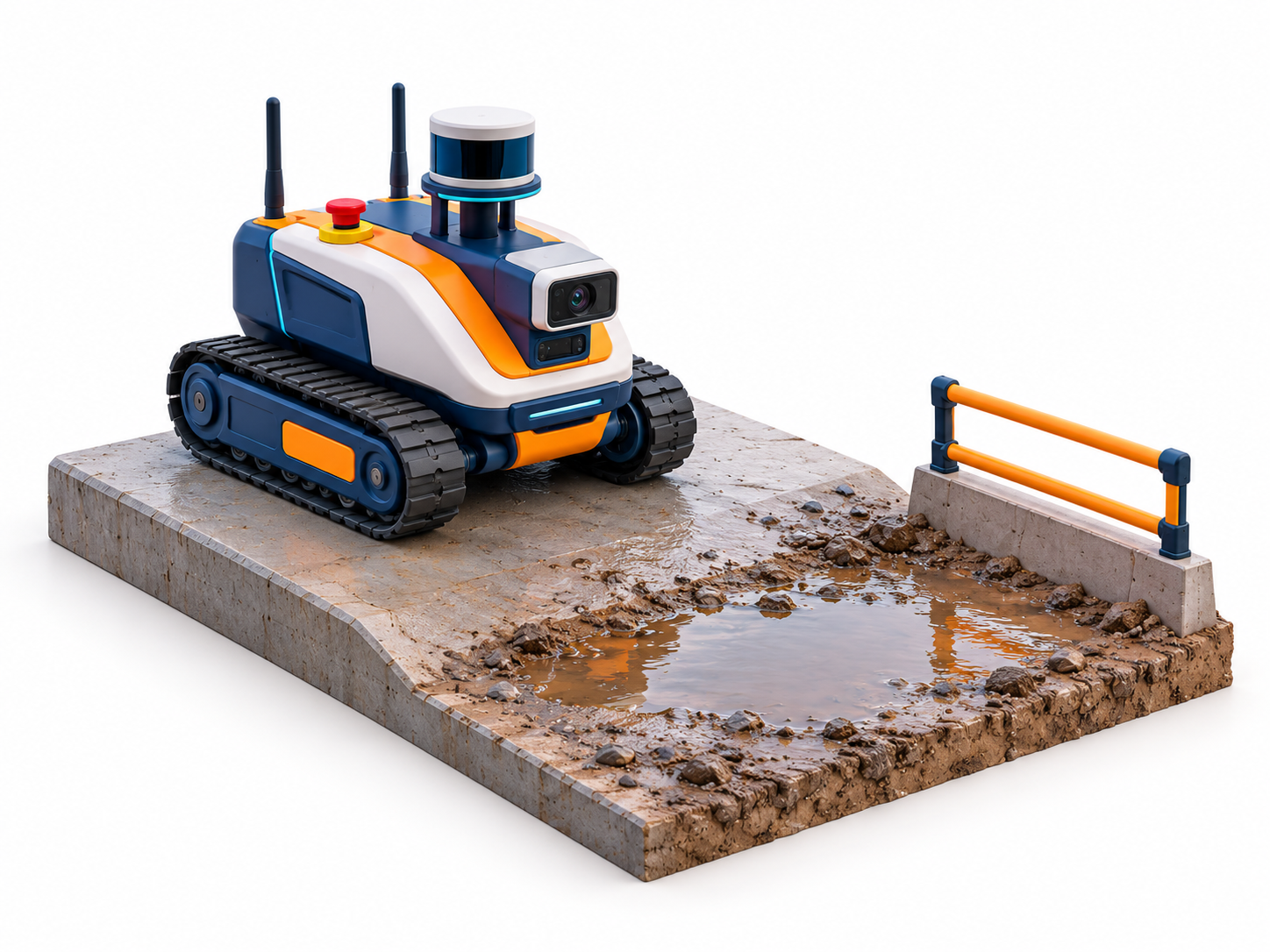
Two primary construction-robotics papers were also published during the week. The first explains why Autoware, originally designed for public roads, exposes gaps on dusty, continuously changing and unstructured construction sites, from sensing and mapping to localisation, planning and control. The second combines LiDAR geometry with camera semantics because LiDAR may miss hazards that are geometrically flat, such as standing water or wet mud. The researchers also released four ROS two sequences from two active sites and five hundred and six annotated frames covering twenty-eight semantic classes.
These are promising studies, not proof of production safety. A construction-robotics pilot must include local dust, mud, water, slopes, moving objects, communications loss and emergency-stop scenarios.
Sources retained in the original edition: https://arxiv.org/abs/2610.04187 ; https://arxiv.org/abs/2610.05505
Analysis: manage an upgrade as organisational change
Today’s analysis is that an Archicad 30 upgrade must be managed as a change programme. Graphisoft’s single launch combines production modelling functions, subscription-plan differences, infrastructure requirements, a beta AI connector, an early-access collaboration platform and a Creator service that is still coming soon. For a BIM manager, this is not one decision. It is a set of decisions with different risk levels.
The first gate is technical compatibility. The workstation, operating system, GPU, add-ons and licence must match the supported matrix. The second gate is information-exchange quality. IFC four point three, RFA families and the Forma connection should be tested with a reference model whose expected geometry, classification, properties, coordinates and relationships are known in advance.
The third gate is business continuity. Multi-project Teamwork migration needs an immutable backup, control counts, version records and a tested recovery path. Public BIMcloud links must be included in the information-access matrix: who creates them, how long they remain valid, what content may be exposed, how a link is revoked and how use is audited.
The fourth gate is product maturity. Production, beta, early access and coming soon are not synonyms. Contractual project data should not be used with experimental functions until storage, access, rollback and vendor-support conditions are clear.
The concrete action plan is as follows. First, build a workstation inventory. Second, create a small reference model covering IFC, RFA, Forma, MEP and Teamwork scenarios. Third, assign every capability a maturity status and an allowed-use context. Fourth, create an immutable backup before migration and test recovery, not only export. Fifth, after the pilot, record not only defects but also elapsed time, data loss, visual differences, permissions and training needs.
Today’s signal is this: a new BIM release becomes safe not when it is installed, but when the organisation can prove that its people, data, workstations and contractual processes still behave as intended.
Watch the edition: https://www.youtube.com/watch?v=wFzq3wEbQ2c
Watch the original BIMETI Daily BIM Tech Brief — 12 October 2026. Archived edition; review the cited sources for details and later updates.